
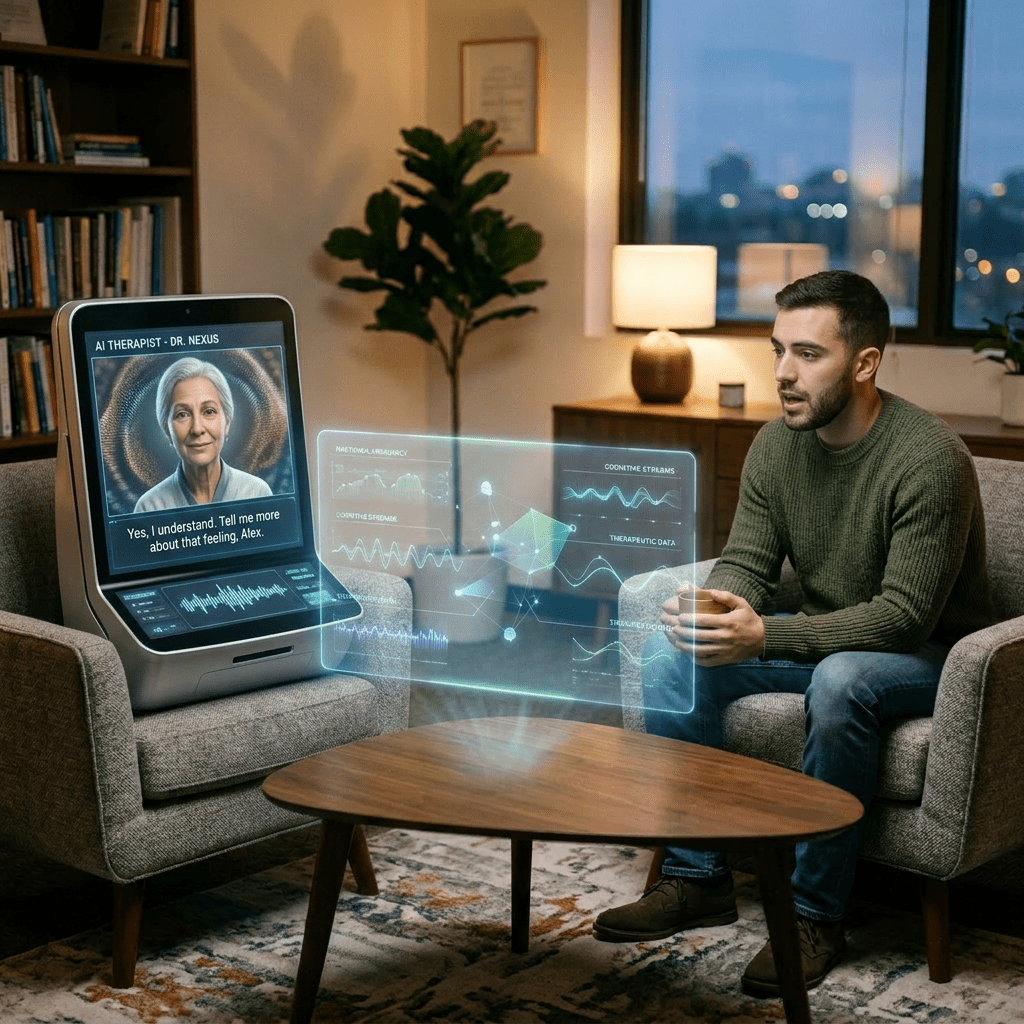
The Rise of AI in Therapy: Reflections of a Clinical Psychologist
As a clinical psychologist with an open approach and 30 years of practice working with people from diverse cultures and languages around the world, I am both inspired and cautious about AI’s rise in therapy. How will it work? What will happen? Is it truly useful, or will it replace psychotherapists? I decided to pause for a minute and ask myself how this will affect my sessions and services. Here are my first thoughts.
On a personal level, I use AI for several things many times a day. From cooking recipes because I hate cooking, to exploring different places around the world to decide on my next vacation. When I hear the news and do not know where a certain place is located, I ask AI. I admit I use AI for the most random things; it has become especially useful in my daily life.

Therefore, it is not strange that AI has also arrived at my practice, given how it is growing and slipping into every corner of our lives. My clients mention AI constantly: «I asked my AI for advice,» or «I asked my AI what to do.» This unfolds at a dizzying pace. While certain traditional schools of psychology remain worried, I believe fear is unnecessary. AI is just a tool. If used thoughtfully, it can enrich both therapists and clients.
One of my first thoughts is that it is crucial to remember that each AI adapts uniquely to its user—it personalizes itself to each person. My AI talks to me in a way that is distinct from how my husband’s AI interacts with him. My AI knows me; it knows the way I process information and answers according to that pattern. This does not inherently create risks; it simply reacts according to who I am.
Some of my clients mention that they have asked their AI how to react or behave in certain situations. And yes, the client’s AI responds to them according to their own «scanner» or behavioral history. However, I still wonder if this might limit their alternatives, closing off options different from the ones the AI «considers» they are capable of doing.

We must ensure transparency in how these AIs shape our perceptions and decisions. This personalization is a powerful feature, but it raises ethical considerations as we move forward. We need ongoing ethical reflection—so that AI remains a supportive instrument, never a substitute for the essential human connection at the heart of therapy. At least for now…


